History of mole, behind iconic dishes. Gourmet Edition
There are dishes that are eaten.
Others are celebrated.
And then there is mole, a ritual in the form of a sauce, an alchemical mixture that has survived empires, revolutions and generations that consider it more of a treasure than a recipe. Here we tell you the history of mole.
In a world searching for the next culinary trend, mole remains a reminder that authentic sophistication is born in kitchens scented with cocoa, spices and tradition.
An origin between legend and reality
The birth of mole is a mystery that divides historians and traditional cooks. Some stories evoke baroque convents where a nun, inspired by an almost divine impulse, mixed everything she found in her kitchen to honor an illustrious visitor.
The result was a dark, thick and perfumed elixir, as surprising as it was unforgettable.
Other versions point to ceremonial preparations of pre-Hispanic origin where chili peppers, cocoa and seeds were already combined during celebrations dedicated to the gods.
Ancient, profound and symbolic recipes.
Whichever version one chooses to believe, they all agree on one thing.
The mole was born with the intention to impress.
The color of time. A culinary work of art
Mole is not simply cooked, it is built.
Each ingredient contributes a different sensory layer. From the pasilla and mulato chiles to the cocoa, cinnamon, seeds, cloves and even the burnt tortilla that adds a unique smoky touch.
There are recipes that integrate more than thirty ingredients, all in a delicate balance that requires intuition and patience. It is a culinary symphony that demands absolute attention.
Its dark, almost nocturnal tone is a perfect metaphor.
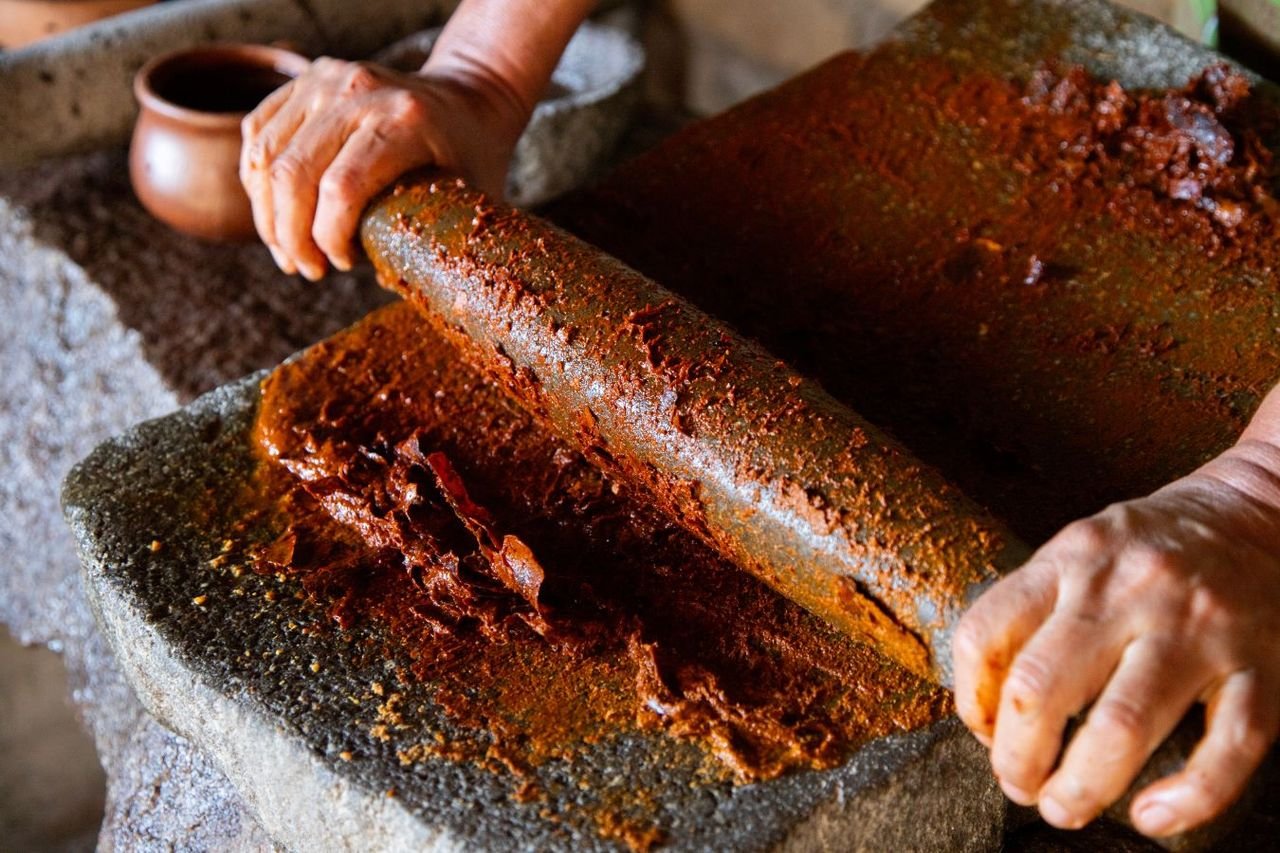
It is the sum of centuries, a thick history that is written with each grinding in the metate and with each family that protects its recipe as if it were an inherited jewel.
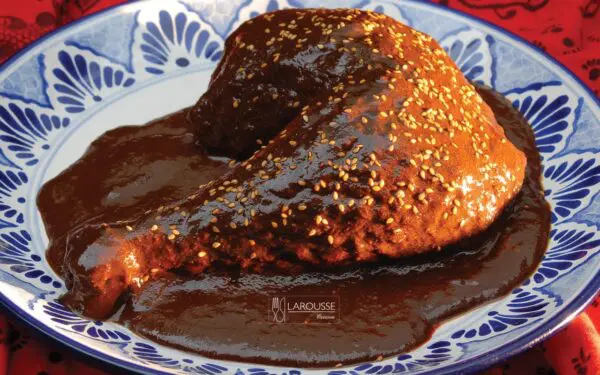
Mole and creative femininity
For centuries, mole has been the domain of women who know the secret language of spices. Cooks, mothers, grandmothers and nuns who have refined this preparation with sensitivity and experience.
For many of them, mole represents life itself.
In the words of one Oaxacan cook
Mole has something that stings, something sweet, something strong. And when it all comes together, it sustains you.
It is a deeply intuitive dish.
Elegant. Complex. Feminine.
Mole in contemporary gastronomy
Haute cuisine has taken mole to new stages. Renowned chefs have transformed it into foams, reductions and accompaniments for unexpected ingredients such as exotic fish or even foie gras.
Even so, no reinterpretation can erase its ancestral essence.
Mole has soul.
And that soul can only be born of slow fire and living tradition.
Why mole is an iconic dish
Because it's not just food.
It is identity.
It is a bridge between cultures.
It is a symbol of celebration that appears in weddings, baptisms and festivities that unite families.
It represents abundance, heritage and pride.
It is an edible masterpiece that has transcended time.